Showing posts with label opinion. Show all posts

September 5, 2017

Their History Matters to Them

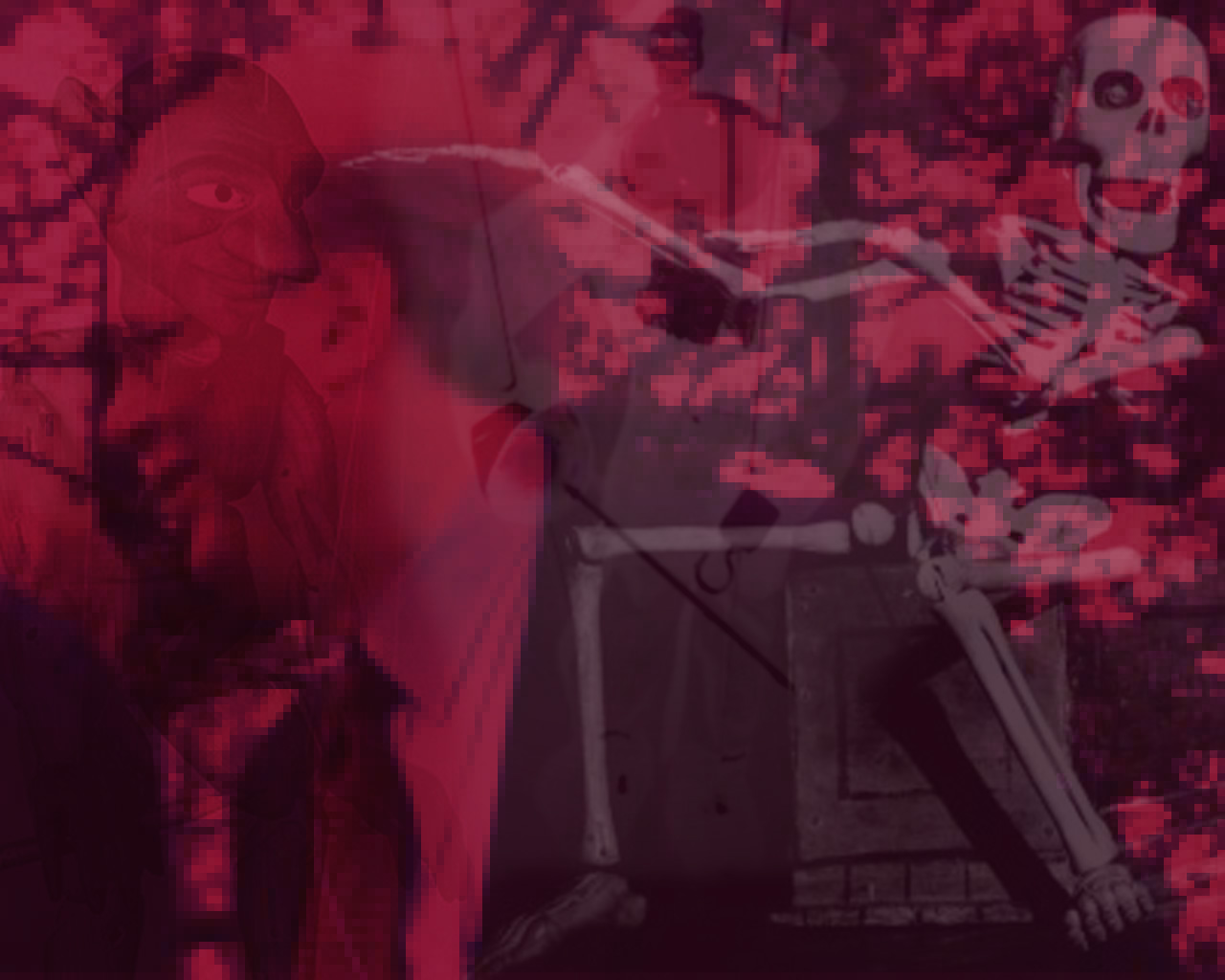
Sculpture: "The Last Voyage"

I recently came across an online discussion about whether or not the Israelites were ever really slaves in Egypt. There's a lot of scholarship on this subject, and it's fascinating to read about the archeological evidence (or lack thereof) for the Hebrew Bible. But I find it even more interesting to think about how the history of this small ethnic group is now known the world over.

I don't find it at all surprising that the Egyptians didn't corroborate a lot of the stories from the Hebrew Bible in their own writings. After all, why would they? They were large and powerful monarchies, and with the effort and expense required to actually write things down 4,000 years ago, why would they waste any of that on stories about a fragment of the slave or migrant population? There were thousands of people who migrated through Egypt's kingdoms back then.

The history of the Israelites (or people who eventually became the Israelites) just didn't matter to the Egyptian ruling class. But it mattered to the Israelites. They carefully preserved the stories of their ancestors, passing them down orally and eventually in written form. As a migrant people, history and shared culture was all they had.

Now, one of the great ironies of history, in my mind, is that many people the world over who have no Hebrew ancestry can list the rulers of Israel and recite stories from their histories; while few beyond scholars can name more than a couple of Egyptian pharoahs. In fact, a lot of people only know Egyptian history through the lens of the Hebrew Bible.

Millennia later, the unimportant migrants, the slaves, are known worldwide. Their histories are just as important as those of the great kingdoms where they toiled anonymously. I wonder, who are the Israelites among us now? Which ignored, marginalized people are carefully recording their own stories from their own perspective - stories those in power aren't even aware of.

A thousand years from now, the people in power now might either be forgotten or else known primarily through the stories of the ones they enslaved and mistreated. It's a good reminder not to discount people's points of view just because they aren't the ones in charge.

May 22, 2015

Bottle Cap from the Future

My husband often leaves bottle caps lying around. It's something we used to argue about, and now, after more than a decade of marriage, joke about. I've given up trying to break him of the habit and just throw them away myself.

This morning I picked up a Stone IPA bottle cap off the kitchen counter and was going to throw it away, but paused, struck by what was printed inside it.


I know exactly what every one of those icons and symbols mean. I know exactly what Stone Brewing is trying to tell me and how to get in touch with them, should I desire to do so.

But how would this bottle cap look to someone from 20 years ago?

In 1995, I had already built my first web page, but the internet was still in its infancy. Enough people were familiar with Windows 3.1 and Mac OS 7 that these logos might remind them of computer icons, vaguely. But they'd have no idea what the symbols stood for. They might interpret it as meaning something like "Please do good and protect nature by recycling this metal object." (Anyone else remember the dolphin icons on cans of tuna from back then?)

What if this bottle cap traveled back in time 30 years?

A person from 1985 might be impressed by the quality of the printing. They might think these symbols were some sort of nifty logos or decorations that the brewing company put there as branding. Or they might think they were some kind of instructional relic from the bottling plant, telling the bottle cap quality inspector where this cap was made, which beer it should go with, and how much pressure to use on the capping machine. Like laundry symbols for manufacturing.

If I traveled back in time with this bottle cap, what would people from the past think if I told them that these four symbols and this one string of letters were enough to find out everything there was to know about the beer company, to see pictures, learn how the beer is made, find every variety made and discover where to buy it? The closest analogue from back then would be a 1-800 number, and that really doesn't even come close.

I think if I told people from 20 or 30 years ago about how we communicate today, it would blow their minds. They would really think we're living in the future.

August 9, 2014

When the World Gets Ugly, Create Beauty

Collage by S. King. Photo credits here.

"And now I see with eye serene the very pulse of the machine."
- William Wordsworth, She Was a Phantom of Delight

For the past couple of years, I have been wondering about the purpose of creativity. I've posted about it in this blog here, here and here, and in comments on other sites. Even though I claimed to have found it in that second post, I didn't really believe what I wrote there for more than a few hours.

I've been pretty pessimistic about the usefulness of creativity and how it's valued in the world today, particularly in business. I see a lot of lip-service paid to being creative when what people are really measured by is how many units of widgets they produce and how well they can squeeze more numbers into the business' bottom line. Innovation, customer satisfaction - sure, those matter, but not in the short term. And management cares most about numbers adding up in the short term.

Yet we're taught from an early age to be creative. What are we supposed to be creating?

My obsession with finding a purpose to creativity reached its nadir with this Twitter exchange. I was sitting at my desk in the office, trying desperately not to sob as I typed those responses. I finished off an entire box of kleenex. I couldn't imagine ever reaching the mental state that Hugh and Jeff shared where they were excited about the possibilities of creativity.

Then last week, I was despairing over the state of the world in general. I'm sure I wasn't alone in this. With war all over the globe, poverty and disease rampant, the world was looking pretty ugly. Equally as ugly were the attitudes of many people I saw. "Screw them, I do what I want," "Every man for himself," and perhaps ugliest of all, "Those people aren't worth helping."

What do you do when faced with a world that doesn't care how mean and ugly it is? Can anything be done?

Yes, I realized. I can do something, even if it's something small. I don't have to be ugly. I don't have to let ugliness thrive in my presence. Just like when I take the time to weed my little garden plot even though the rest of the yard is still a jungle, I can make the effort to fight entropy, even if it's in a small way.

Many people are blind to the possibilities around them. They see things as they are, and look no further. Creativity lets you see beyond what is and envision what could be. You can see the beautiful house hiding in the shabby relic. You can see the party decorations lurking in recycled trash. You can see a delicious recipe in a pile of random leftovers. You can imagine a song, a picture, a dance, a party, where none existed.

That's what creativity is good for: to create beauty in an ugly world. Creativity won't make you successful or popular or powerful, but that's OK. It will do something more important. Creativity will help make the world a more bearable place, and bring some small measure of joy to those around you.

Even if no one acknowledges your creative efforts, know this:

You are making a difference. You are making the world more beautiful.

November 6, 2013

The Formula for Righteousness

Did you know that there's a simple formula for calculating righteousness?

Add together the value of everything you own, plus the amount in your bank account and any investments. Then subtract the amount that you owe, any loans and debts.

If the result is a large number, you are a righteous person! If it is a small number, or even a negative number, you are not.

But, you say, what if the number is small or negative, and you know that you are righteous? How can this be?

There is a simple answer: Someone is interfering with the way things ought to be. Someone is getting between you and the blessings you deserve, and those people MUST BE STOPPED!

Unless...

Unless righteousness is not a number. Unless God's approval is not measured in dollars and cents.

Perhaps a person's wealth or lack thereof has little to do with their character. You can be poor and good, or rich and evil, or vice versa. Maybe wealth isn't a measure of holiness, and material blessings are not all there is worth striving for.

And maybe instead of tearing each other apart, we should lift each other up. Maybe we should reserve our anger for a system that promotes inequality, and a culture that worships greed. Maybe we really should swallow our pride and work together for the good of all.

That would indeed be righteous.

"Blessed are you who are poor, for yours is the kingdom of God." - Luke 6:20

July 22, 2013

Is I Is or Is I Ain't?

I listened to "Neurophilosopher" Patricia Churchland on NPR's On Point today. She argued that science proves we are our brains, and nothing more. There is no self, no consciousness, no soul.

I don't know who peed in her Cheerios, but she delivered this news with the sort of glee the Grinch displayed as he waited for the Whos to all cry "Boo-hoo!" on Christmas morning. Her message was that our brains give us the illusion of self, we need to realize that this is just an illusion. The only acceptable religion is Buddhism or some variation thereof, and if you believe anything else you're, at best, a poor sucker, and at worst a plague on the human race.

I have to say, her arguments were rather convincing. And she does make an excellent case for suicide. After all, if I'm just an autonomous pile of neurons, if emotions are just dressed up nerve impulses and "I" don't really exist, why should I keep on existing if I'm tired of it? If the illusion of existence stops being enjoyable, why not end it? I don't need to consider the feelings of friends and family because they're also illusions. It would be like considering the feelings of the light bulb when I turn off the light. Feelings are just convenient labels for various combinations of nerve stimulations. In the end, it's all electrical impulses.

On the other hand, I have to wonder where the rest of the body fits into her worldview. How can I be just a brain when that brain is inside a body that's affecting it? I have skin and eyes and ears and a nose and a tongue. I have a lymphatic system and a digestive system and a million billion invisible bacteria living in and among all those parts.

What's more, this body is in an environment filled with physics and chemistry and biology. Things happen. Things affect me. Other little autonomous piles of neurons - animals and people - interact with me. Many of them are also under the illusion that they, too, have a self. And their illusion communicates with mine, reaches out to it through sound and color and shape.

So I suppose I have to decide: do I abandon the illusion that I exist, or embrace it? Do I do what's rational and logical and end my life when it suits me, or do I let my little illusion of self reach out to the other illusions around me and let them comfort me? Do I let them make me laugh and smile, even knowing those are meaningless neural responses?

Do I believe that a simple sack of meat is all that I am, or do I believe in synergy, that the sum of the parts can be more than the whole, and that this synergy encompasses not only me, but my family, my community, this world, and this universe?

January 3, 2013

What we crave: Meaning, Belonging & Self-Expression

We've been hearing about irony's imminent death since 2001, although so far it hasn't happened. But after listening to The Takeaway's recent show titled "The End of Irony?" I think popular culture is finally due for a resurgence in sincerity.

Right now, Boomers and Gen-Xers control much of the media, but the voice of Millennials is rising. The Millennial generation has been raised in an irony-rich environment created by Boomers, embraced and extended by cynical Gen-Xers. Amid this cynicism, Millennials have been told that the end justifies the means: get good grades and a degree, check off the boxes, who cares what you actually learn. All their lives they've been awarded meaningless trophies and ribbons to boost their self-esteem. They've watched religious leaders become increasingly judgmental and wealth-obsessed.

What's missing? Meaning. 

Millennials have embraced the modern equivalent of motivational posters, images paired with inspirational quotes shared over social media. They've made My Little Pony: Friendship Is Magic with its message of simple, optimistic sincerity a surprise hit. Folky-sounding music full of heartfelt emotion, like Mumford and Sons', is popular again. Millennials are just beginning to hit their 30's in force, just beginning to rise to positions of power outside of the internet niches where they currently hold sway. As they begin to have more influence over larger swaths of mass media, expect more focus on meaning and the search for it.

What the Other Generations Want

Baby Boomers, growing up in a conformist society, learned to value self-expression and individual achievement. Look at the movie heroes they created: Indiana Jones, James Bond, Superman. These are men who won't let the rest of the world tell them what to do, they go their own way. Look at restaurant menus and grocery store aisles since Boomers ascended to power: everything comes in a dozen different varieties, everything is customizable, everything is "create-your-own."

Gen-Xers grew up in a culture where divorce was both new and increasingly common, and the civic infrastructure was increasingly corrupt, mistrusted, and crumbling. Left to fend on their own, they grew to crave family and a sense of belonging. As an example, look no farther than the recent Avengers movie. Would Boomers have created a film where the world's most powerful superheroes form a team and become friends? Gen-Xers invented social media, using technology to connect with other people.  They turned workplaces into substitute families, shunning formality and bringing socializing into the office through game rooms and planned group outings.

Get Ready for the Sincerity Deluge

This isn't to say that Millennials don't appreciate sarcasm and can't enjoy cynical humor (e.g. Rage Comics). There will still be plenty of that to go around for a good long time, especially with Gen-Xers replacing aging Boomers. But anyone who wants to connect with people 30 and under needs to include a kernel of meaning in whatever they do, a sincere message that will connect with audiences and tell them it's OK to think, feel, and wonder.


December 5, 2012

My Presentation to the CEO Roundtable

Today, President Obama and House Speaker Boehner are making presentations to an organization called the Business Roundtable. According to their web site, they are "an association of chief executive officers of leading U.S. companies." They wield a lot of political and economic influence, so getting these CEOs behind one's deficit-reduction plan would be a coup.

I'm sure Obama and Boehner will each present their plans to avoid the austerity bomb (fiscal cliff), and make the same arguments we've all already heard. But if I had the opportunity to address this group, here's what I would say. I'm not an economist, so I'm kind of talking out of my ear on this, but it would be interesting to see their reaction.

My Imaginary Presentation to the Business Roundtable

Look at this chart:


The red line is the percentage of GDP represented by corporate profits. The blue line is the percent of GDP represented by wages. These days, the word among VC's is that consumer-focused startups are out, enterprise-focused startups are in. You can see why: the enterprise is where the money is.

The only problem is, that blue line represents your customers. 

Take a look at this:


Look at the red line. It shows the change in available disposable income for your customers. It's recovered since the recession ended, but it's still down from the pre-recession high, and on a recent downward trend.

Think about this: Your employees (pointing at random guy in front row) are your customers (pointing at another random guy), and vice versa. If your customers don't have enough disposable income, they will not buy your products. Profits will suffer. Share prices will drop.

There are two solutions to this: the government solution, and the free-market solution. In the government solution, the government raises taxes on your income and your companies' income. The government subsidizes your employees' basic needs, like food and health care, that they can't afford. 

The other solution, the free-market solution, is for you to choose to raise your hourly wages in the U.S. and give people who want to work full-time the opportunity to do so. Your employees will have more disposable income, they will be able to take care of themselves, and the government doesn't have to get involved. As a matter of fact, that would increase taxable revenue while decreasing entitlement spending. And the potential increase in demand would ensure that all of you still have customers who can afford your products five, ten, fifteen years from now.

Either way, you're going to be losing money in the short term. But will that money go towards increased government entitlement spending, or will you allow your hard-working employees to earn it the old-fashioned way? It's your choice.

November 20, 2012

Trigger Topics at the Dinner Table

Thanksgiving will be here in two days, a day when millions of Americans sit down to dinner with their extended families. Some gatherings will be amiable, some will not.

In an effort to make dinner table conversation more pleasant, I thought it would be useful to think of a couple topics that are triggers for rants or arguments. If I know ahead of time what my trigger topics are, so if the conversation goes in that direction I can either reroute it or step away. Even better, if I share these topics with a couple of family members, they can avoid those subjects as well. And if I know their trigger topics, I can do the same for them.

Conventional wisdom says that you should avoid talking about politics and religion, but those two topics, in general, don't provoke me. The subjects that make me go off on a ranting tangent or expound embarrassingly from my limited knowledge are not what you'd expect.

The topics below are ones I know I tend to either go on and on about at length or else start arguments about. For pleasant holiday dinner conversation, it's best to avoid them. I'll save these for the wine-fueled late-night debates after the kids are in bed.

My Trigger Topics

  1. Transportation infrastructure
  2. Ronald Reagan
  3. Economics
What are some topics that you (or your relatives) should avoid? Current events, or that one family story your mom likes to tell? Post yours in the comments.

October 17, 2012

A Moderate Pinner Is a Popular Pinner

Just because you created a new Pinboard doesn't mean you have to fill it up right away. Because although you may feel a sense of satisfaction upon seeing your brand-new board filled with pins, your followers will log on to Pinterest to find their pinstreams clogged with 100 images from the same damn jewelry site, or 50+ uncredited scenic landscape photos from tumblr. For example.

Think of your followers, and remember that they follow people other than you. People whom they actually know and like and who are more selective about what they pin. Those who pin with careless abandon may find themselves losing followers, namely, me.


October 15, 2012

Living in the Future

Today while driving home, my 3-year-old son was chatting about the moon. He has quite an imagination. He said that there were robots on the moon.

I replied, "There aren't any robots on the moon. The robots are on Mars."

It was a perfectly factual statement, but the true impact of what I had said hit me in that moment. We are living in the future. We are living in a time of human history when there really are robots on Mars, robots that we built and sent there.

It's a good time to be alive.

Artist's rendering of one of NASA's Mars Rover robotic vehicles

October 10, 2012

Who I'm Really Afraid Of

Ever since I started making my desktop picture Photoshop collages, I've done something a little bit different with the October collages. Instead of selecting random images based on a word or phrase, I create the October collage to represent a scary person.

Jack Valenti Summoning Cthulhu, October 2002
Karl Rove: Puppetmaster, October 2003

This year, I've had a hard time coming up with a subject for my October collage. It's not that there aren't plenty of scary people in the world. But I haven't been able to think of anyone who truly scares me the same way past collage subjects did. I began to wonder why this was so.

One thing I noticed, looking back at past collages, was that none of these people scare me anymore. Heck, I couldn't even remember Jack Valenti's name until I looked up the blurb on my web site archive. It's like all my past monsters have been, not slain, but diminished. They've lost their power to inspire fear.

Tower of the Neocons, October 2004
Jim DeMint's House of Horrors, October 2005

Finally, I realized something: at the time I made each of these collages, I felt that their subjects' power was underestimated. What made these people scary to me was not just their ideas or their agendas, but the fact that they were power-hungry and almost no one seemed concerned about checking that power.


The World According to Glen Beck, October 2010
(Yes, I'm aware there's a significant gap in my ouvre.)


Since I made each of these collages, the people in them have all either been fired, retired, or acknowledged as a threat (sometimes all three). Nobody underestimates their ability to manipulate or their lust for power anymore.

And that's why I'm having trouble thinking of a subject for this year's October collage. Bashar al-Assad? He's a scary guy, but he's also got half the world trying to stop him. Texas Judge William Adams? Also scary, but also a known quantity. Plus, since this is about people I personally am afraid of, I do have to consider that a judge in a distant state has very little power to affect my life.

When it comes right down to it, there are only two people I can think of who really, honestly, scare me, and I don't know that either of them are a fit subject for a picture collage. The first is an unnamed North Carolina social worker who took a friend's child away; I don't have any way to get a picture of her to use for the collage. The second is a local businessperson who's running for political office, and I'm leery of vilifying someone I occasionally see around town (I live in a very small town), even though I know this wouldn't be the first time she's been portrayed negatively.

I'll keep trying to come up with a truly scary person to immortalize in pixels before the month is over. On the one hand, it's good not to be afraid. But on the other hand, it's bad for my art.

October 4, 2012

Variety or Success

Variety or success: Pick one. As I near the middle of my life, I'm having to come to terms with a lot of the choices I've made. One that occasionally frustrates me is that my success is not commensurate with my potential. But when I think back on what I could have done differently, I realize that, faced with the option of single-minded pursuit or variety, I always chose variety.

I'm glad I had the opportunity to try cheerleading.
That's me on the far left.
One reason I chose to go to Sewanee was that they didn't require me to declare a major until my sophomore year. Looking back now, I do wish I had maybe majored in art, but at the time, I had studied so much art already, I was eager to try all the things I'd never tried before: film history, cheerleading, religious studies, Greek life. I was eventually forced to pare down my activities because there are only so many hours in a day, but I continued that eclectic approach to my studies for the rest of my time on the Mountain, taking electives in choreography and Japanese.

Making an ice cream cone out of feathers wasn't part of
the official curriculum at AIA. This was a project for a
creative club my friends & I started.
When I realized that I needed to go back to school to get a job in the field I was really interested in, I chose the Art Institute of Atlanta over the other available art schools mainly because their new Multimedia degree program let me take classes from several different disciplines: design, video, animation, and web/interactive. I did well enough there that I got a good internship, which turned into a good job. But once I was settled there, true success eluded me because, once again, I couldn't make myself focus on one thing to the exclusion of all else.

I could have taken off on my own to create a start-up, as some of my co-workers did, but that would have meant putting all my time and effort into that one thing. I wanted to keep playing in a band. I wanted to have a boyfriend, and get married. While I do regret some missed opportunities, I don't regret any of the things I did. I don't know that I could have made any other decision and been happy.

My career, such as it is, has been like crossing a stream by hopping from rock to rock. There's no particular goal in mind other than not falling in and drowning, so when one rock seems about to tumble away beneath me, I hop to the next closest one. I figure as long as I'm safely above water, I'm doing all right. And now that I'm carrying a family with me, jumping in and letting myself sink or swim isn't a viable option.

So I'm trying to find peace with the fact that I just don't possess the sort of single-minded drive required for true success. I am grateful for all the wonderful life experiences my pursuit of variety has given me. I need to remember that gratitude, and somehow translate it into happiness and contentment, because at this point in my life, I am who I am, and I don't expect I'm ever going to change.

September 29, 2012

Why I Didn't Get The Catcher in the Rye

My sophomore year in high school, I read The Catcher in the Rye. I considered it just another slightly dull Great Work of Literature that American high schoolers were required to read in order to be considered properly educated. All I took from it was that Holden Caulfield had gray hair and an incomprehensible relationship with his landlady, and that the title of the book was too subtly meaningful to make sense to me.

illustration by Rakka
I checked off that box and moved on. Years later, I heard peers of mine mention how inspirational Catcher was to them as teenagers. "Did they read the same book I did?" I wondered. I heard people praise Caulfield's disdain for "phonies" and admire his cavalier attitude toward authority and refusal to do what was expected of him. None of that came across when I read the book. I just saw a narrative of an odd man doing random things. The characters and setting had absolutely nothing in common with me or my life.

At fifteen years old, I was an avid reader. (Still am, in fact.) My favorite book at the time was Watership Down by Richard Adams, but I also tore through V.C. Andrews' entire pre-mortem oeuvre, anything by Ray Bradbury, and Anne McCaffrey's Dragonriders of Pern series. These books are all fantasy or have fantastical elements, but they spoke to my reality. True, I am not a rabbit or an orphan; I never fought evil fascist overlords or rode a dragon. But in those books, despite the superficial differences between their characters and settings and my ordinary suburban life, I found a lot of common ground. I wasn't struggling with authority, but I was struggling with emotions. I didn't need to be told it was all right to rebel - I already felt like a quirky outsider, and I needed to hear that there was strength in being unique. I didn't want to drink, smoke, or have sex, and I didn't really fit in with all the kids who were into that sort of thing. I just wanted to find my compadres, my friends, the people who knew me and loved me for who I was.

One's experience with a book is colored by one's experiences in life. When I read The Catcher in the Rye, I have to suppose I was in a very different place than the kids who found it meaningful. For that reason, I don't think the fact that it left me cold makes me an ignoramus, any more than it makes J. D. Salinger any less of a great author.

August 20, 2012

Why I Learned to Play the Viola

Seth Godin opines that if you're feeling stuck, your problem may not be that you can't find the answer. Rather, you should consider asking a different question.

The only picture I could find of me playing the viola, with the band
Aromatic in Atlanta, 1999.
One day during orchestra practice in high school, our music teacher, Mr. Walker, announced that someone had donated a viola to the school. He asked if anyone was interested in learning to play it. Immediately, my hand shot up.

At that point, I had been playing the violin for ten years. I wasn't great, but I wasn't awful either. I was third-chair second violin in our school orchestra, right above the kids who were just learning to play and below the ones who had been playing about as long as I had but were more dedicated about practicing.

For some people, the orchestra system of ranked chairs may be motivating: you can aspire to move up the ranks by getting better than the people ahead of you. I never felt that way. For me, playing the violin was about making music, not competing for accolades. Why would I want to spend all my free time practicing in hopes of knocking Won Woo out of his position as concertmaster? He was doing a great job and I had no desire to replace him. When Mr. Walker held up that viola, I saw my chance to get out of the violin rat race altogether. There were no other violas in our orchestra at that time. I would be the only one, contributing something unique to the overall sound.

With the viola, I had to learn a new set of strings and the alto clef. My violin teacher made me start over re-learning songs I'd learned when I was six years old. But I didn't mind because I was doing something different and learning new things. I was filling a hole in the score that I hadn't even known was there.

Some people are motivated by the desire to compete and win in a crowded field. But some of us are motivated by finding the problem no one else has even tried to solve and, by turning our attention to it, make the whole orchestra sound a little more complete.

August 2, 2012

Revisiting Resolution No. 6

The rhetoric around the Interwebs is getting heated. Some days, the quantity of vitriol pouring out of my screen makes me despair. How can the world contain so much hate, fear, and anger?

This question has been weighing on my mind. But the thing is, I knew at the beginning of the year that it would be like this. That's why, in my list of New Year's Resolutions, number six states that I resolve "To face the hate and anger in the world with love and prayer. To love my neighbor and trust in God and pray for mercy and love with compassion toward all."

Many people have pointed out that Facebook is part of the problem. But I think that it's also part of the solution.

someecards.com -

Yes, Facebook is where a lot of heated opinions get aired. But behind every one of those angry memes and cartoons and petitions is a friend. It's not some anonymous idiot posting those words, it's a person I've known and liked for years. When I look at that person's name, it conjures a flood of memories. If I click on their name, I might even see pictures of our shared experiences.

I have friends who are opinionated and passionate and intelligent and funny. That's part of what made me like them in the first place. If my friends are fearful, I want to be a reassuring presence. If they are angry or hurt, I want to listen to their troubles. I want them to know that, whatever madness is going on at the moment, at least they have a friend they can count on. It's what I'd want them to do for me.

I'm just one person and I can't stop all the anger on the internet. But I hope that by loving and praying and just being a friend, I can help create a small island of sanity in this crazy world.

July 4, 2012

E Pluribus Unum

"Out of many, one." That's the English translation of the Latin phrase "E Pluribus Unum," which was the unofficial motto of the United States of America from its founding until 1956. The motto appears on the Great Seal of the United States, and was stamped on U.S. coins beginning in 1786. (You can read more of this history at Wikipedia.)

Photo by www.FutureAtlas.com
Today, the time when many different people came together to form one nation seems hopelessly far in the past. Americans value individuality above togetherness, stubbornness above compromise. We're encouraged to retreat into our little individual castles and take care of our own problems by ourselves. We don't know our neighbors. We don't participate in our communities or our government.

Today, on the day we celebrate our nation's birthday, I invite you to imagine a different United States; the country of our past, and - hopefully - of our future. Imagine a country where people know their neighbors instead of fearing them. Imagine a town, a county, a state, where people are involved with their government and don't let themselves be hoodwinked by crooked politicians. 

Above all, imagine setting aside our differences - differences of opinion, race, class, geography, and heritage - and working together to ensure life, liberty, and the pursuit of happiness for all Americans. Imagine setting aside our selfish individual desires and pledging to each other our lives, our fortunes, and our sacred honor. 

We are diverse. We are many, but we can still come together to show that we are one nation. It's not too late. E Pluribus Unum.

June 5, 2012

Living Vicariously

Yesterday, I went to a funeral for Brenda Douglas. She was a wife, mother, grandmother, great-grandmother, and active in the church and the community. Beyond that, she was also an artist and photographer, and had a long career as a court reporter.

In his eulogy, our rector said several times that Brenda "lived her life to the fullest." This is clear from the legacy she left: her family, her art, the good she's done for people around her.  I hope I can claim half as much accomplished in my life when my time comes.

It got me to thinking how easy it is not to live life to the fullest nowadays. It's so simple to sit back and just watch instead. We can live vicariously through TV and movies and immersive video games. People who have given up on accomplishing anything with their own lives can live vicariously through their children, pushing kids into ever more competitive milieus.

I don't want to live vicariously. As long as I am alive and able, I want to experience life for myself, to live each day to the fullest.

April 25, 2012

What Is Creativity For?

For the past week, I've been thinking a lot about the purpose of creativity. Everyone seems to want it, but what do you do with it once you have it? Like the proverbial dog chasing the car, if someone suddenly waved a magic wand and made you more creative, would you just stand there, stupefied, and wonder, now what?

I've been struggling with this because I feel like I have plenty of creativity but not enough of the things I really need: focus, drive, organization. Without those other things, what use is creativity? And if I had those things, would I even need creativity? With focus, drive, and organization, I could accomplish a lot of things. I could get the house clean, our finances in order, our family schedule organized, fill out my timesheet accurately and in a timely manner. None of that requires creativity. In fact, creative impulses distract me from doing the things necessary to live a proper life.

But I have the creativity anyway. It's not going away, so I might as well make the best of it. What useful things can I do with it?

And then the other morning, just as I woke up, it hit me.


Creating things that didn't exist before, that wouldn't be there if I didn't make them. That's useful. Whether it's a song, or a picture, or a story, or an idea; whether it's a new recipe or an interesting way to display photographs or an elegant javascript function, these are all created things that owe their existence to a creative impulse.

God is called the Creator, and humans are supposed to be small, imperfect images of God. We, too, are creators. It would be a shame to ignore that heritage.

April 18, 2012

How to Be Less Creative

Creativity is mostly useless. Here is a short list of the times in a typical day when creativity is helpful:
  • Keeping from being bored while doing chores
  • Making up stories to tell my boys
  • Blogging
  • Solving a particularly difficult problem at work
Altogether, that accounts for about 3 hours out of each day. Subtracting the time spent sleeping, that leaves 15 hours per day when I do not need to be creative.

During those hours, creativity is an impediment to the things I need to get done. I need my thinking to be logical and organized. I do not need to be distracted by ideas.

Steps for Becoming Less Creative

There are thousands of books and articles about how to be creative. But how do I switch it off? What if I really just need to be less creative? 

The May Real Simple has an article titled "Can You Get More Creative?" It includes a list, "7 Habits of Highly Creative People." I'm going to turn the list around backwards and see if it contains any useful advice for blunting the creative impulse.

  1. Play. Work.
  2. Borrow ideas. Dismiss any ideas that aren't your own.
  3. Sleep on it. Complete all work by the end of each day.
  4. Collect every seed of an idea. Don't study, observe, or learn.
  5. Embrace constraints. Rail against constraints.
  6. Commune with nature. Avoid nature.
  7. Compete. Avoid competition.
Number 4 is the tough one: that's what I mean by needing to turn off my brain. How can I not remember things I see and read? How can I stop putting together all the puzzle pieces rattling around in my head? It happens automatically, it may just be how the human brain is wired.

Perhaps being less creative just takes practice.

April 17, 2012

Society, Community, and Civilization

Which word works best to complete this sentence? "I am pro-..."

Society?
If I'm pro-society, does that make me a socialist?

Community?
If I'm pro-community, does that make me a communist?

Civilization?
Saying "I'm pro-civilization" makes me sound as if I either want to cover the earth with factories and parking lots, or else hate spending time out in nature away from flush toilets and coffee makers. Neither of these is true.

Lately I've heard a lot of politicians and pundits question the need for any of these three. That's why I want to state for the record that 
  • I am glad to be part of a community, a group of people living together and supporting each other. 
  • I am also glad to be part of society, an organized structure of communities that has laws and solutions for dealing with big problems. 
  • I am glad to be part of civilization, to have access to the scientific and cultural advances of the last few millennia. 
The motto of my alma mater, the University of the South, is "Ecce quam bonum et quam iucundum habitare fratres in unum," or "Behold how good and how pleasant it is for brethren to dwell together in unity." (Taken from Psalm 133) Perhaps that says it best.

Ecce Quam Bonum